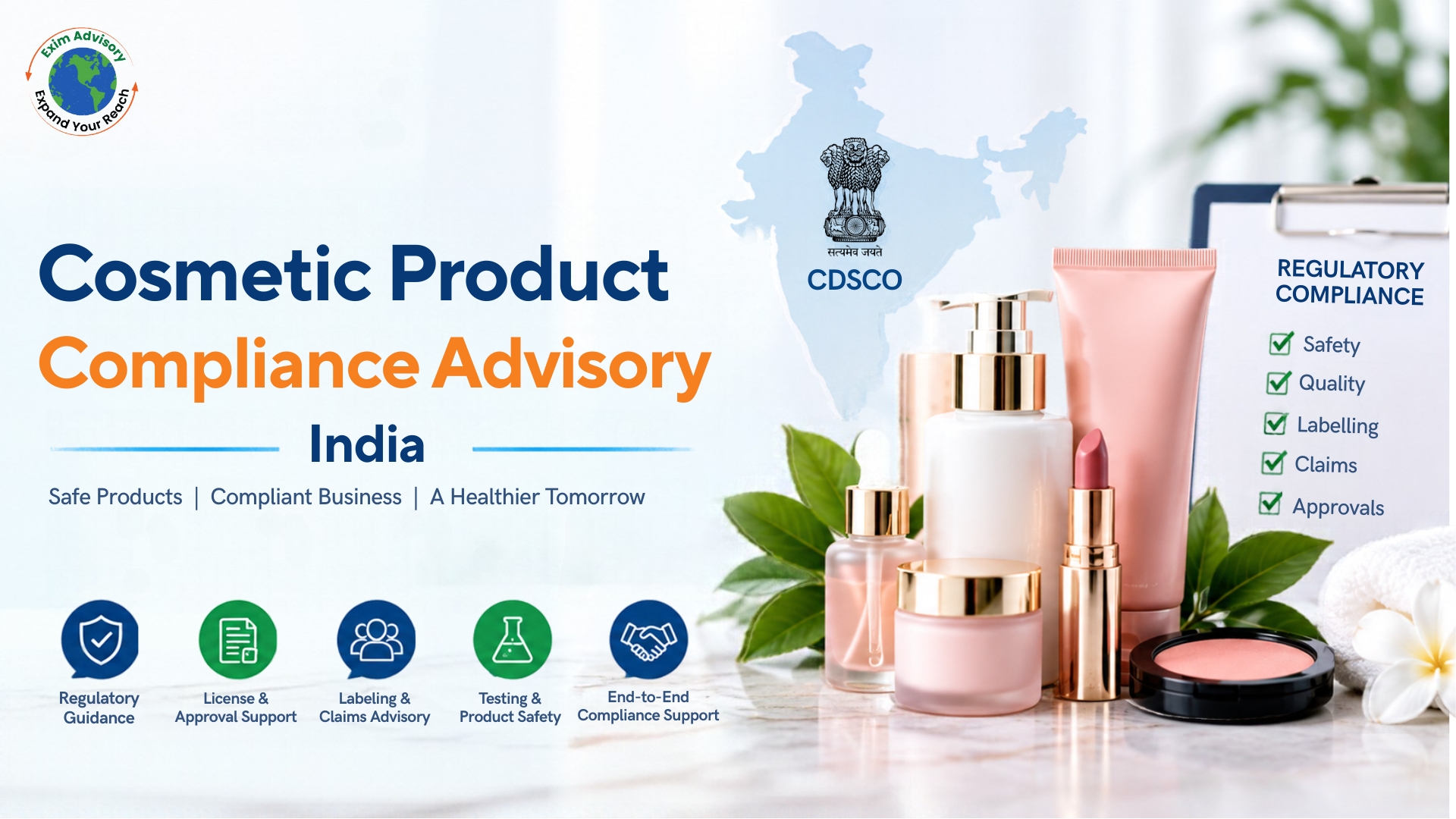
Cosmetic Product Compliance Advisory in India: Keeping Your Registered Products Compliant
Getting a cosmetic registered or licensed feels like the finish line. It isn’t. A product can clear registration cleanly and still get pulled off shelves months later, over a labelling detail that changed, an ingredient standard that was revised, or an advertising claim that crossed a line nobody flagged before the campaign launched.
This is the part of the cosmetics business that catches even experienced brands off guard. Regulatory compliance in India isn’t a box you tick once at launch. It’s a standing obligation that runs as long as your product stays on the market, and the rules underneath it changes more often than most companies track.
Let’s go through what cosmetic regulatory compliance covers day to day, who needs to watch it, and where brands lose track of things that matter.
What Cosmetic Compliance Actually Covers
Cosmetic compliance in India runs on the Drugs and Cosmetics Act, 1940 and the Cosmetics Rules, 2020. Registration and manufacturing licensing are only the entry point. Once a product is on shelves, several ongoing obligations sit underneath it:
- Correct labelling on every unit produced
- Ingredients that stay within India’s standards as those standards are revised
- Advertising claims that don’t stray into territory reserved for drugs
- A ban on animal testing that applies to domestic and imported products
- Upkeep of your registration or licence, including retention fees and updates when something changes
Cosmetic product compliance isn’t a single filing. It’s the ongoing discipline of keeping your product, packaging, and marketing aligned with rules that don’t stay static because your certificate already exists.
Who Needs a Cosmetic Compliance Advisory
Brands already selling in India. If your products are registered and on the market, compliance doesn’t stop there. Label reviews, ingredient checks, and advertising checks are ongoing work.
Brands reformulating an existing product. A formula change can introduce an ingredient that falls under a restriction. It also generally means updating your registration or licence, not only checking the new formula.
Marketing and packaging teams. A new campaign or label redesign can introduce risk. Claims that a product treats or cures a condition risk being handled as drug claims. Other claims, such as “clinically proven”, need to be backed by evidence you can produce.
Businesses importing cosmetics. India’s animal testing restriction applies to imported products, which catches brands that assumed compliance in their home market meant compliance here.
If your product is already registered, licensed, and selling, cosmetic compliance advisory is the work that keeps it legally allowed to stay that way.
Key Details of Cosmetic Regulatory Compliance
Labelling requirements. Every cosmetic sold in India must carry specific declarations on its inner and outer labels. These include the product name, manufacturer or importer details, batch number, manufacturing and expiry dates, net contents, the ingredient list, and directions or warnings where needed. Manufactured products carry the manufacturing licence number, and imported products carry the import registration certificate number. BIS standards and other labelling rules for packaged goods apply alongside the Cosmetics Rules. A wrong label is a contravention however compliant the formulation is.
Ingredient standards that are revised over time. India’s composition requirements sit largely in the BIS IS 4707 series, which the Cosmetics Rules reference, covering prohibited and restricted substances and permitted colours. These standards are revised from time to time, so a formulation that was compliant when you registered can fall out of line. Compliance advisory work includes monitoring these changes, not only checking a formula once.
The animal testing ban. India prohibits animal testing of cosmetics and prohibits the import of cosmetics whose development involved animal testing since 2014. A signed declaration from the manufacturer that the product has not been tested on animals is part of the registration application. It is a distinct check you need to run against your supply chain, not only your own facility.
Advertising and claims. Cosmetics that claim to treat, cure, or prevent a medical condition risk being treated as unauthorised drug claims. Marketing teams working independently of regulatory affairs often cross this line without realising. Other advertising and consumer rules may also apply to the claims you make.
Keeping your registration or licence current. Your import registration and manufacturing licence stay valid as long as the retention fee is paid, which is due within five years of issue. A change in formulation, manufacturer, premises, variants, or product categories generally means updating the approval rather than assuming it still applies.
Quality and recall. The Rules prohibit manufacture or import of cosmetics that don’t meet prescribed specifications. They also place recall obligations on the manufacturer or authorised agent, including stating the reasons for a recall and informing the licensing authority.
Consequences of Falling Out of Compliance
Ongoing non-compliance, such as mislabelled products, non-compliant ingredients, or unauthorised claims, contravenes the Drugs and Cosmetics Act, 1940 and the Cosmetics Rules, 2020, and exposes you to the Act’s penalty provisions.
Enforcement is often the second problem, not the first. The first is usually a product recall, a retail partner pulling stock over a labelling issue, or a campaign that has to be pulled mid-run because a claim crossed a line. These cost more in reputation and lost sales than the compliance fix would have.
Documents and Information We Review
A cosmetic compliance advisory works from the specifics of your product and market presence. To assess where you stand, we typically look at:
- Current product labels and packaging artwork
- Full ingredient list and formulation details
- Your registration certificate or manufacturing licence, and retention fee status
- Marketing materials, advertising copy, and product claims across your channels
- Supply chain documentation confirming testing practices, particularly for imported products
- Any correspondence or notices from regulatory authorities
- Product variants or reformulations planned or in progress
The goal isn’t a one-time checklist. It’s an ongoing view of where your product, packaging, and marketing stand against rules that keep moving.
Frequently Asked Questions
What’s the difference between cosmetic registration and cosmetic compliance?
Registration and licensing are the approvals that bring a product to market. They stay valid as long as retention fees are paid and they are updated when things change. Cosmetic compliance is the ongoing work of keeping labelling, ingredients, and marketing aligned with current rules for as long as the product stays on the market.
Do I need a cosmetic compliance advisory if my product is already registered?
Yes, if you want to stay compliant. Registration confirms your product met requirements at a point in time. It doesn’t guarantee your labelling, formulation, or marketing will stay compliant as standards and rules change.
How often do India’s ingredient standards change?
The BIS standards that set ingredient requirements are revised from time to time, on no fixed public schedule. That is why ongoing monitoring matters more than a one-time check at launch.
Can a marketing claim cause a compliance problem even if the product is fine?
Yes. Claims that suggest a cosmetic treats or cures a medical condition can be treated as unauthorised drug claims, separate from whether your formulation or labelling is compliant.
Does the animal testing ban apply to imported products?
Yes. India prohibits the import of cosmetics whose development involved animal testing, and a manufacturer’s declaration is part of the registration application. Your supply chain needs checking, not only your own practices.
What happens if I reformulate a registered product?
You need to check the new formula against ingredient standards, and you generally need to update your registration or licence. Selling a reformulated product under an outdated approval defeats its purpose.
What happens if my labelling falls out of compliance?
You’re exposed to the Act’s penalty provisions, and you face the practical risk of retailers pulling stock or a recall becoming necessary.
Is cosmetic regulatory compliance the same for every product category?
No. Categories can carry different labelling, ingredient, or testing considerations, so a review needs to be specific to your actual range.
Can EXIM ADVISORY handle compliance advisory alongside registration or licensing?
Yes. Compliance advisory works best alongside your registration or licensing status, since the two are connected even though they are separate obligations.
Get Your Cosmetic Compliance Reviewed With EXIM ADVISORY Before a Gap Becomes a Recall
A registered product that quietly falls out of compliance doesn’t stay a quiet problem. It becomes a pulled label, a stalled campaign, or penalty exposure the moment someone notices. Talk to EXIM ADVISORY about your cosmetic product compliance advisory today, and get ahead of the gap before an inspection or a retail partner finds it first.